
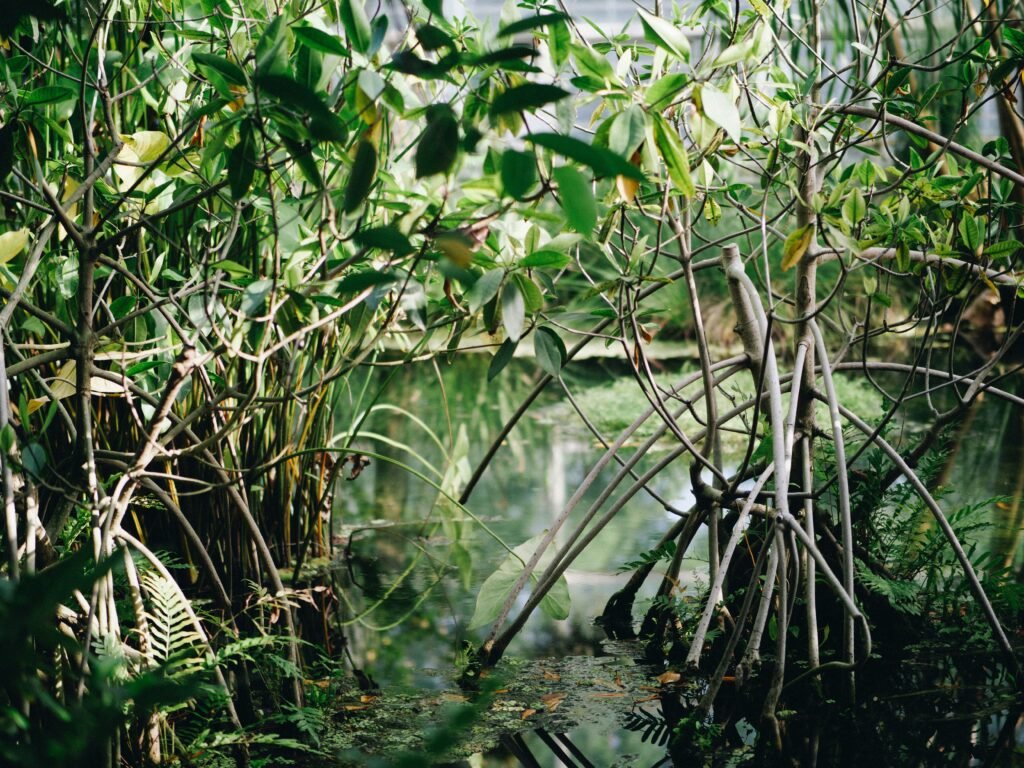
The Red Mangrove (Rhizophora mangle) is one of Florida’s most iconic coastal plants and a critical component of the state’s marine ecosystems. Easily recognized by its distinctive arching prop roots, the Red Mangrove thrives along shorelines, tidal flats, estuaries, and coastal lagoons throughout tropical and subtropical regions. In Florida, Red Mangroves are commonly found lining bays, barrier islands, and calm coastal waters where they help stabilize the shoreline.
Facts About the Red Mangrove (Rhizophora mangle)
Unlike most plants, the Red Mangrove produces seeds that germinate while still attached to the parent tree, forming long, pencil-shaped seedlings called propagules. These propagules eventually drop into the water and float until they find a suitable place to root in the sediment. Mature Red Mangrove trees can grow 20-30 feet tall, though some individuals may grow even taller under ideal conditions. Their glossy green leaves and reddish bark give the tree its common name, while its specialized root system allows it to thrive in salty, oxygen-poor soils.
Because of their ability to grow directly in tidal waters, Red Mangroves often form the outermost layer of Florida’s mangrove forests, acting as the first line of defense between land and sea.
Planting Red Mangrove
Planting a Red Mangrove is very different from planting most native trees because these coastal species are adapted to tidal environments. In Florida, mangroves are protected, so it’s important to always follow state regulations and permitting guidelines before planting, trimming, or relocating mangroves.
When planting Red Mangroves in suitable coastal restoration areas, propagules (seedlings) can often be planted directly into soft sediment along the shoreline.
Basic planting steps:
- Select an appropriate coastal site –
Red Mangroves require tidal influence and brackish or saltwater environments. They thrive in muddy or sandy sediments along calm shorelines. - Prepare the sediment –
The planting location should allow the propagule to anchor securely in the soil while still receiving tidal flow. - Plant the propagule upright –
Insert the pointed end of the propagule several inches into the sediment so it can stabilize and begin root development. - Allow natural tidal watering –
Red Mangroves rely on tidal cycles for hydration and nutrient exchange. In most cases, no additional watering is necessary once planted.
Because mangroves are so specialized, restoration projects often plant them in clusters along shorelines, allowing their root systems to develop together and create natural habitat structures. It is also easier to establish already propagated mangroves that have been grown beforehand in potted conditions.
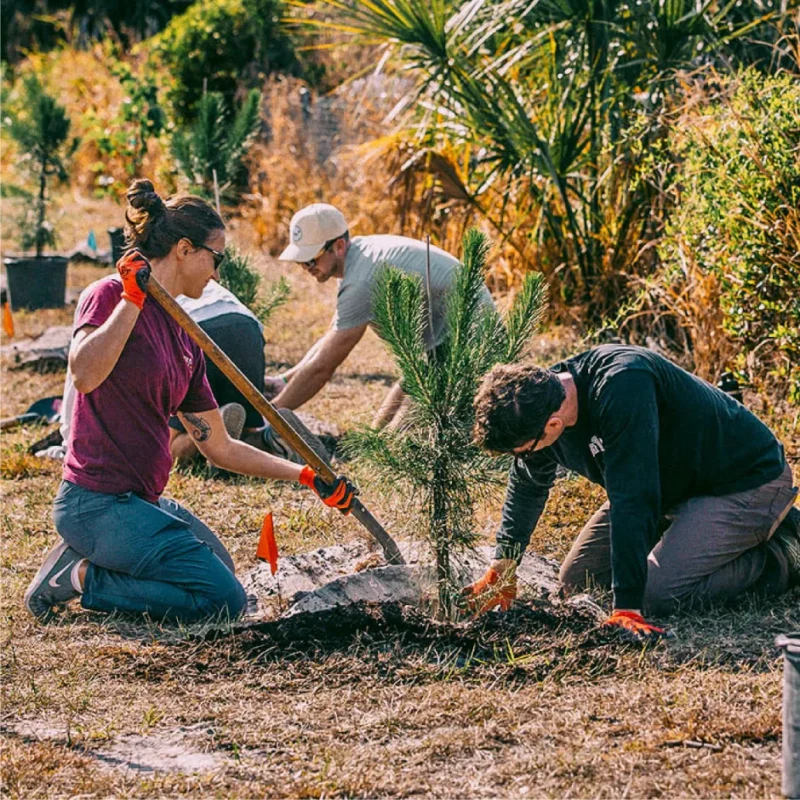
Community mangrove plantings are one of the most effective ways to restore coastal habitats while engaging local volunteers in hands-on environmental stewardship. Recently, MAR hosted a community Mangrove planting at Gulfport Beach, bringing together volunteers to help strengthen the shoreline and support local marine ecosystems. Events like these demonstrate how collective action can directly improve coastal resilience while giving community members the opportunity to learn about Florida’s native mangrove forests and their ecological importance.
Maintenance
One of the many benefits of planting Red Mangroves is that they are naturally adapted to the coastal conditions where they grow, meaning they require very little long-term maintenance once established.
Young Red Mangrove seedlings should be monitored periodically to ensure they remain upright and anchored, especially after storms or strong tidal events. In restoration projects, volunteers or staff may check survival rates and replace propagules if needed during early establishment.
Mangroves should never be heavily pruned or altered without proper permits, as Florida law protects mangrove species due to their ecological importance. Once established, Red Mangrove forests tend to expand naturally as propagules drop and take root nearby.
Plant Care
The Red Mangrove is uniquely adapted to survive in salty, waterlogged soils that would kill most other plants. Specialized root structures allow the tree to stabilize itself in soft sediment while also capturing oxygen from the air.
These trees thrive in full sun and warm coastal climates, making Florida’s shoreline environments ideal for their growth. Their leaves also have the ability to filter salt, allowing the plant to tolerate seawater conditions.
Because Red Mangroves depend on tidal water flow, they should only be planted in environments where natural hydrology remains intact. Healthy water movement is essential for nutrient exchange and sediment balance.
Nature’s Coastal Shield: The Ecological Importance of Red Mangroves
The Red Mangrove plays a vital role in protecting Florida’s coastlines and supporting marine life. Its intricate prop root system creates a natural barrier that slows waves, traps sediment, and reduces shoreline erosion. During storms and hurricanes, mangrove forests act as natural buffers, helping to protect inland communities from flooding and storm surge.
Beyond shoreline protection, Red Mangroves also serve as critical nursery habitats for marine species. Juvenile fish, crabs, shrimp, and countless invertebrates shelter among the tangled roots where they can grow safely away from predators. Many commercially and recreationally important fish species rely on mangrove habitats during their early life stages.
Mangroves are also incredibly effective at capturing and storing carbon, making them important allies in the fight against climate change. Coastal mangrove ecosystems can store significantly more carbon per acre than many terrestrial forests.
Additionally, Red Mangroves support a wide range of wildlife including wading birds, shorebirds, oysters, sponges, and small mammals, all of which depend on healthy coastal ecosystems to survive.
By protecting and restoring Red Mangrove forests, communities help safeguard marine biodiversity, strengthen coastal resilience, and preserve the natural beauty of Florida’s shoreline environments.
Join us at one of our next planting events!
References
Alongi, D. M. (2002). Present state and future of the world’s mangrove forests. Environmental Conservation, 29(3), 331–349.
Florida Department of Environmental Protection. (2022). Mangrove trimming and preservation act guidelines.
Lewis, R. R. (2005). Ecological engineering for successful management and restoration of mangrove forests. Ecological Engineering, 24(4), 403–418.
NOAA. (2021). Mangrove ecosystems and coastal protection.