
Have you ever encountered a tree that felt like it had a personality? It’s easy to treat trees and plants like scenery but when you stop and look at them as individuals, they can become truly special. In fact, some pretty interesting ones call St. Petersburg home. Native live oaks and slash pines play a starring role, but some exotic species fill out the cast. Here are a few individuals that tend to turn heads. If you have a favorite we haven’t listed, let us know on Instagram or Facebook!
Southern Live Oak: Boyd Hill Nature Preserve
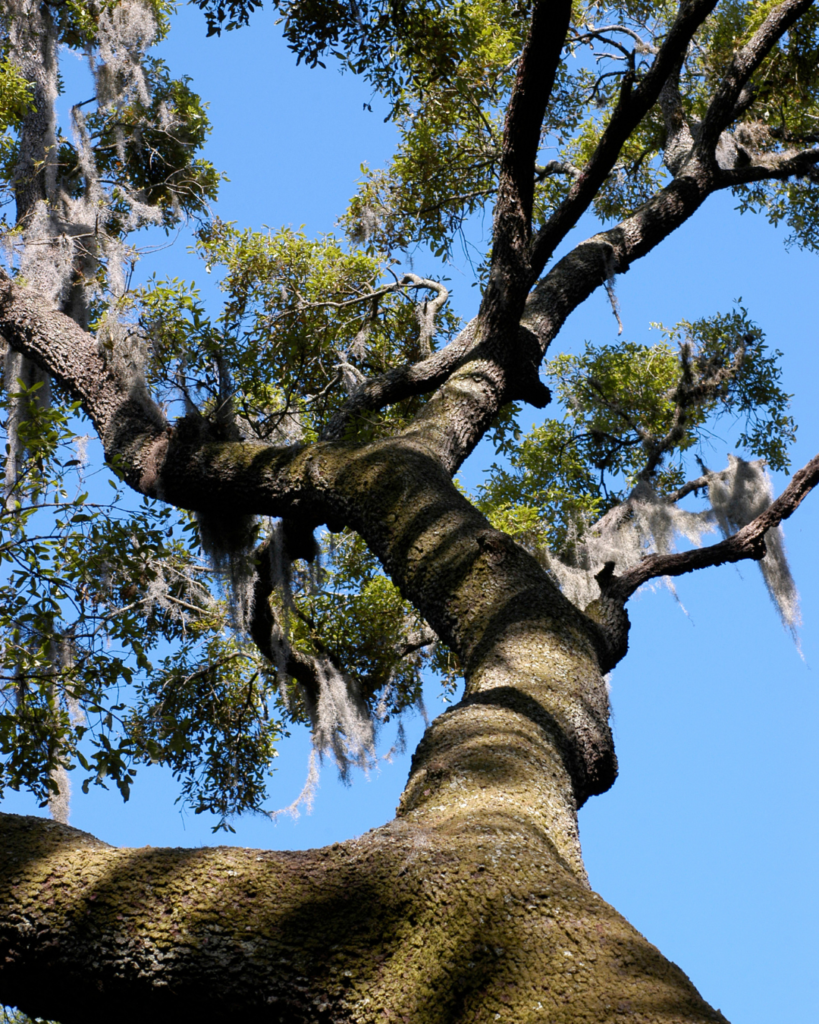
If you wander far enough along the main trail through Boyd Hill Nature Preserve’s 400 acres, you will encounter a tree that might conjure elfen lore. You can’t miss this absolutely massive southern live oak, which is thought to be 250-300 years old. Live oaks thrive in Florida’s climate, because they adapt to many types of soil, tolerate drought, and stand strong in hurricane force winds. They’re a common sight in St. Petersburg, but be careful not to confuse them with the laurel oak, which lives only 50-70 years.
Not only is this particular Boyd Hill tree large and old, it gives us a rare look at how live oaks naturally grow. University of Florida IFAS notes that they can reach up to120 feet wide “when grown under the right conditions.” That’s wider than they are tall! Rarely do trees in our suburban environment experience those conditions, however. When oaks grow near houses, buildings, and power lines, we need to prune the lower branches and train them to grow up more than out. By contrast, the Boyd Hill tree has low, sweeping branches that hover close to the ground. If you’re a tree hugger, this one can practically hug you back.
Royal Palms: Sunken Gardens
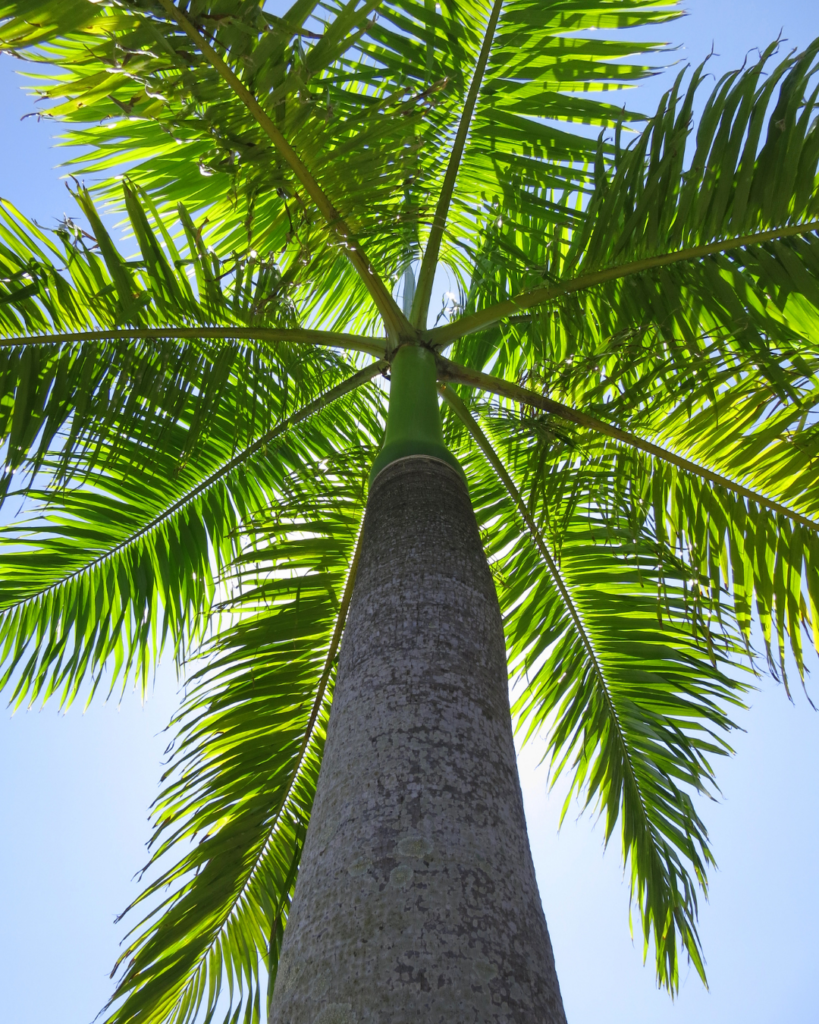
The iconic Sunken Gardens features a huge array of different tree and plant species representing tropical habitats around the world. Some of the most impressive, however, are natives. The gardens were started by the Turner family in the early 20th century and their son, Ralph, started planting royal palm seedlings when he was just 13 years old. The family intended to sell them, but they grew too large, too fast, to make that plan practical.
Today, those royal palms stretch 80 feet into the sky above the gardens and are thought to be the tallest trees in Pinellas County! Keep in mind, however, palms are not technically trees. Inside their trunks, palms of all species have a different structure than true trees, and a different way of transporting water and nutrients to their foliage. Some biologists posit that palms are more closely related to grasses.
As for royal palms in particular, south Florida makes the most hospitable home. Like live oaks, they can withstand heavy storm winds. Birds feast on their fruit and disperse seeds as they travel.
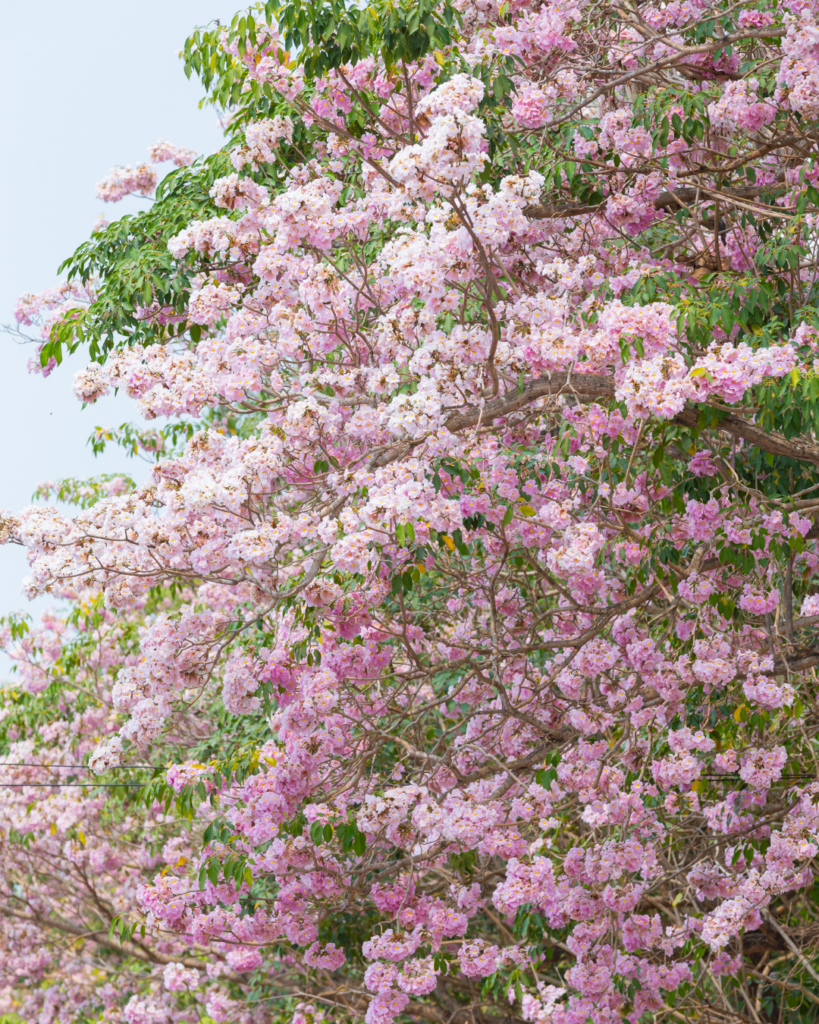
Pink Trumpet Tree: Coffee Pot Bayou
Along Coffee Pot Bayou, at Coffee Pot Blvd. and 23rd Ave. NE, a certain tree puts on quite a show each February or March. This pink trumpet tree stands on private property, but you can easily admire it from afar. The explosion of pink arrives with fanfare each winter, so keep an eye on local news outlets or social media so you can catch it. You’re likely to see photographers and even painters set up nearby to capture the spectacle..
The pink trumpet tree gets its name from the distinctive flowers it produces. It’s in the same genus as trumpet trees with white or with yellow blooms. It’s partly deciduous, which means it drops some of its leaves over the winter. And, though it’s native to the Caribbean and Central America, the trumpet tree is not considered invasive. It grows well in central and south Florida and can provide food for hummingbirds.
Trees for Today and Tomorrow
Take a minute to consider whether you have a favorite tree, whether one that lives in a visible spot like these, or tucked into your own yard. If you can, why not plant one now that someone may cherish in the future?
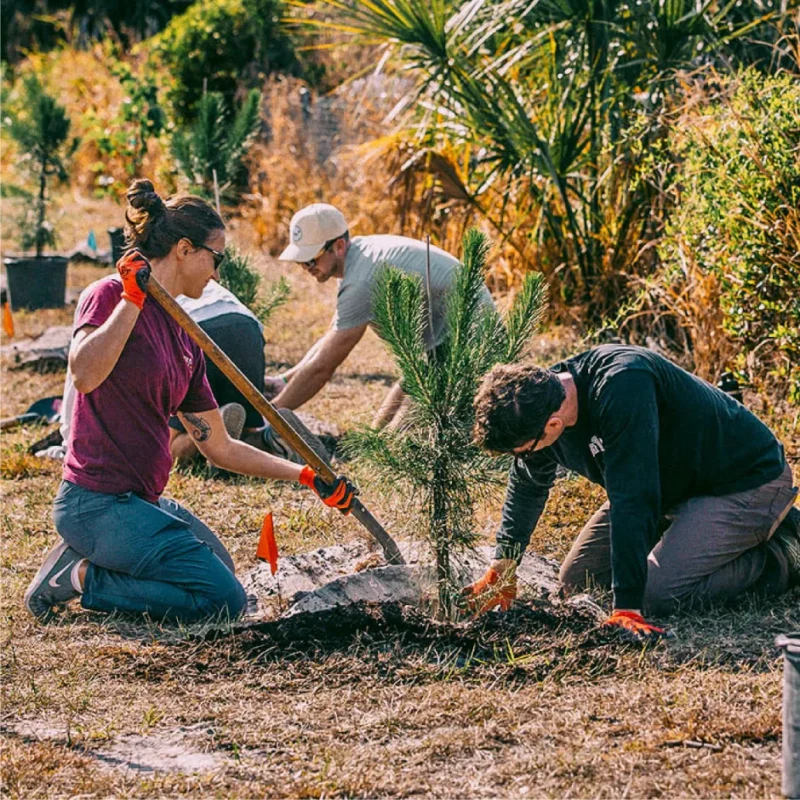
To date, our TREE Program has planted more than 2000 trees, many of them along the Pinellas Trail, with help from people just like you. We monitor and water them, with hopes that one day they’ll be counted among the region’s “must-see” trees. As they grow, they’ll provide shade, habitat, and beauty. If you would like to join us in planting and maintaining trees, or in other types of regenerative work, follow us on social media or check our list of upcoming events.
Sources:
University of Florida IFAS
Sunken Gardens
Boyd Hill Nature Preserve
Tampa Bay Times