
The American Persimmon tree is one of Florida’s most delightful native surprises. At first glance it may look like just another woodland tree, but in the fall it becomes a wildlife buffet and a sweet seasonal treat for people who know when to harvest it. This hardy native species thrives across Florida’s diverse habitats and plays an important role in supporting local ecosystems while requiring very little long-term maintenance.
Key Takeaways
- The American Persimmon tree is a resilient Florida native suited for restoration and landscapes
- Fruit is only edible once fully ripe and soft
- Provides critical fall food for wildlife
- Requires minimal care after establishment
- Excellent for increasing biodiversity in urban and natural spaces
About the American Persimmon Tree
The American Persimmon (Diospyros virginiana) is a deciduous tree native throughout Florida and much of the southeastern United States. Typically reaching 35 to 60 feet tall, it grows in full sun to partial shade and adapts well to sandy, loamy, or clay soils. Once established, the American Persimmon tree is highly drought tolerant and well suited for restoration sites as well as home landscapes. Its seasonal fruit production makes it especially valuable for wildlife, while its adaptability allows it to thrive in both natural and urban environments.
How to Plant
Planting an American Persimmon tree follows the same best practices as other native trees, but giving it proper root establishment is especially important because the species develops a deep taproot.
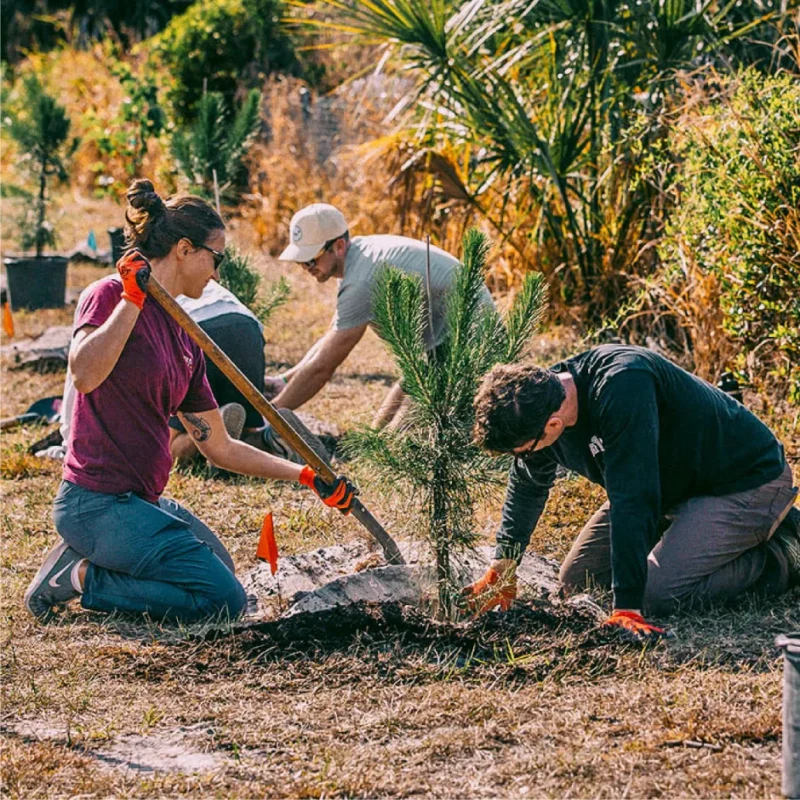
Choose a location with plenty of vertical space and good sunlight. Dig a hole twice as wide as the root ball, but not too deep, as it should be level with the ground. After removing the container, gently loosen any circling roots so they grow outward into the surrounding soil.
Set the tree so the top of the root ball sits level with the ground, then backfill using only the native soil you removed. Avoid compost or soil amendments. Native trees adapt best when they establish directly into the existing environment. Build a small watering berm around the base, water thoroughly, and apply 2-3 inches of mulch, while keeping mulch about a foot away from the trunk.
Maintenance
During the first year, consistent watering helps the American Persimmon tree establish strong roots. Water two to three times per week for the first few months, then reduce to once weekly until the tree is established. After the first year, supplemental watering is usually only needed during extended drought.
Young trunks are thin and sensitive to damage, so protecting the bark from mowers and string trimmers is critical. Tree guards can be used to mitigate damage. Fertilizer is not recommended, as native species grow stronger and more resilient when adapting naturally to the site conditions.
Growing the American Persimmon Tree
Once established, the American Persimmon tree becomes remarkably self-sufficient. It tolerates heat, seasonal flooding, and dry conditions, making it well suited for both urban landscapes and restoration areas.
Very little pruning is required beyond removing dead or crossing branches. The tree is dioecious, meaning male and female flowers grow on separate trees. Only female trees produce fruit, and they need a nearby male tree for pollination.
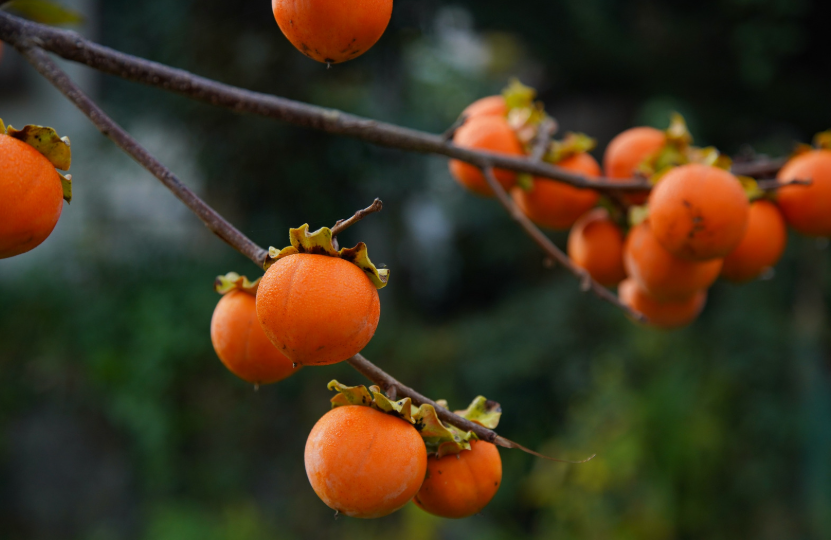
The fruit begins to grow green, but as it ripens in fall, it softens into a deep orange color and develops a rich honey-like sweetness. This is a natural timing mechanism that prevents animals from eating it too early.
Nature’s Dessert Bar
In autumn, the American Persimmon tree transforms into a seasonal feeding station for wildlife. The soft fruit drops gradually over several weeks rather than all at once, providing a reliable food source when many other plants have stopped producing.
Raccoons, opossums, foxes, deer, and numerous bird species rely on persimmons during this time of year. Instead of a short feeding frenzy, the tree supports sustained energy for migrating birds and mammals preparing for winter. Spring flowers also attract pollinators, adding another layer of ecological value. By planting the American Persimmon tree, we aren’t just adding shade, but restoring a natural food web.
For more native planting guidance, explore our MAR Native Plant Guidebook, Rooted in Florida, which you can currently pick up at Tombolo Books and Book and Bottle.
Get Involved!
Planting native species helps rebuild habitats and strengthen Florida’s ecosystems. Join one of our upcoming volunteer planting days and help us grow a healthier, more resilient urban forest together.
References
University of Florida IFAS Extension. (n.d.). Diospyros virginiana: American Persimmon.
Florida Native Plant Society. Native Plant Database.