
Facts
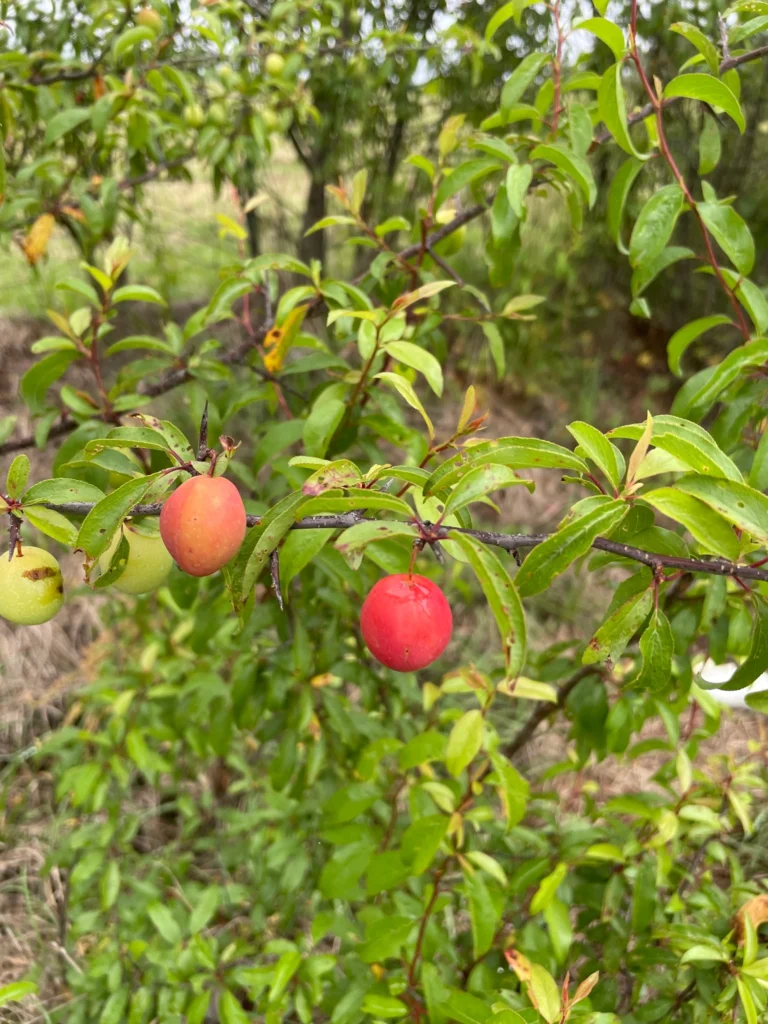
Chickasaw plum (Prunus angustifolia) is a small, deciduous native tree or large shrub found throughout Florida and the southeastern United States. Typically growing 10 – 20 feet tall, it produces abundant white blossoms in late winter to early spring, often before many other native plants bloom. These flowers give way to small red to yellow plums in late spring and early summer. Chickasaw plum is highly adaptable, thriving in sandy soils, open woodlands, and along roadsides, making it an excellent choice for restoration projects and native landscapes. Now is the perfect time to start planting for the spring!
How to Plant
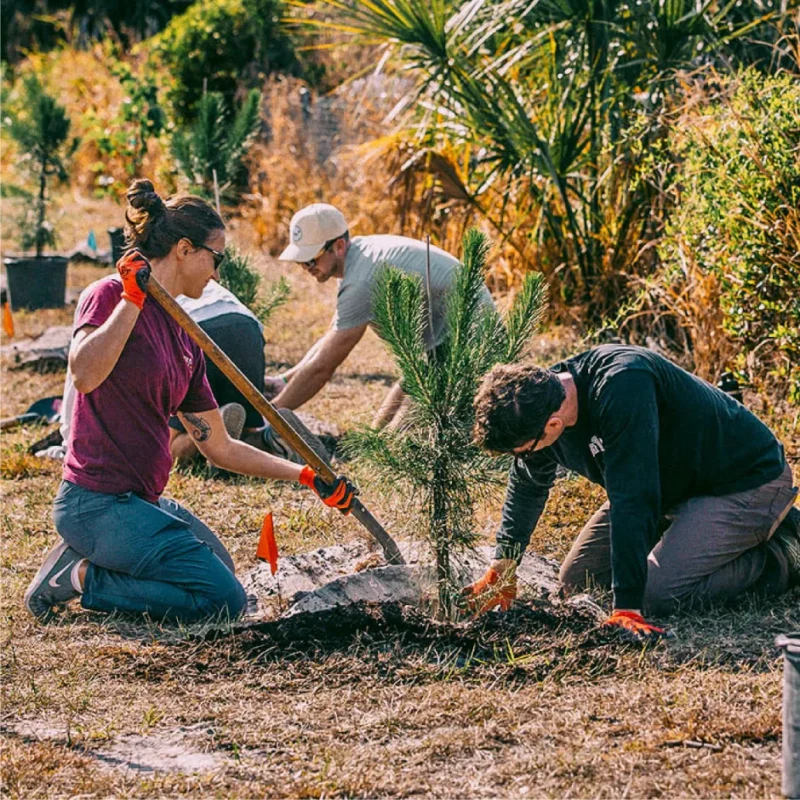
Select a sunny location with well-draining soil, as Chickasaw plum prefers full sun for optimal flowering and fruiting. Dig a hole twice as wide and the same depth as the root ball. Gently loosen the roots before placing the plant in the hole, ensuring the root flare is level with the surrounding soil. Backfill with native soil, tamp lightly to remove air pockets, and water thoroughly. Space multiple plants 10 – 15 feet apart to allow room for spreading and sucker formation. Apply a layer of mulch around the base, keeping it a few inches away from the trunk.
Maintenence
Water regularly during the first year to help establish strong roots. Once established, Chickasaw plum is drought-tolerant and requires minimal supplemental watering. This species naturally spreads through root suckers, which can be left in place to form a thicket for wildlife or selectively pruned if a more compact shape is desired. Prune lightly after fruiting to maintain structure and remove dead or damaged branches.
Plant Care
Chickasaw plum typically does not require fertilizer, especially in native or restoration settings. Over-fertilizing may reduce flowering. Monitor for pests such as caterpillars or aphids, which are usually part of a healthy ecosystem and rarely require intervention. Avoid heavy pruning during the dormant season, as this may reduce spring blooms.
A Plum Perfect Choice
Chickasaw plum is an ecological powerhouse. Its early blooms provide one of the first nectar sources of the year for native bees and other pollinators. The fruits are enjoyed by birds, mammals, and people alike, while dense thickets offer excellent nesting and shelter habitat. As a larval host plant for several butterfly species, Chickasaw plum plays a vital role in supporting Florida’s native food web from the ground up.
Chickasaw plum is a beautiful and functional addition to native landscapes, trails, and restoration sites across Florida. Look for these early spring bloomers during your next walk, and consider planting one to support pollinators and wildlife year-round.
Join us at an upcoming MAR planting event to help expand native habitat in our community!
References
- Gilman, E. F., & Watson, D. G. (1994). Prunus angustifolia: Chickasaw plum. University of Florida, IFAS Extension.
- Lady Bird Johnson Wildflower Center. (n.d.). Prunus angustifolia (Chickasaw plum).
- U.S. Department of Agriculture, NRCS. (n.d.). Prunus angustifolia Marshall. Plant Guide.